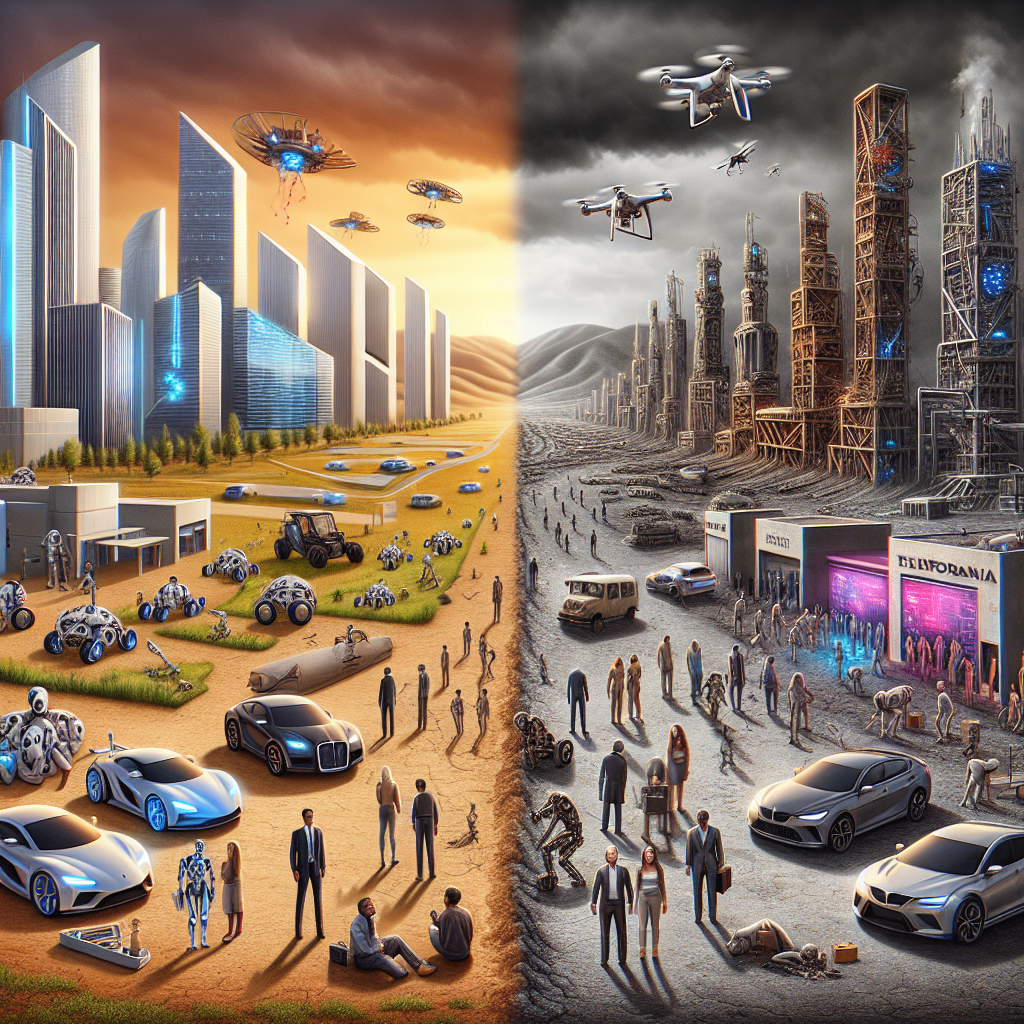
# Headline: Proposed Legislation in California Could Reshape the Future of AI Development
Hello, successful professionals and users of AI wonders like ChatGPT, let’s dive into some fresh perspectives on the evolving landscape of AI. Isn’t it interesting how debates around AI regulations are heating up? Let’s ponder over this – Should creators be held accountable for the potential misuse of their AI creations?
California is undoubtedly at the forefront of this heated debate as it deliberates on multiple bills that may reshape the AI industry significantly. Among these, the debates around SB 1047 and AB 3211 are particularly noteworthy. If passed, these groundbreaking proposals could dramatically alter the AI developer milieu next month. They may even establish a precedent for other states to follow, given the absence of federal laws. Isn’t that a potentially game-changing scenario?
Let’s delve deeper into understanding these impending bills, their possible implications, and the substantial impact they might create within the Californian AI community.
## SB 1047: A Closer Look at Artificial Intelligence’s Next Frontier
Would you believe that the “Safe and Secure Innovation for Frontier Artificial Intelligence Models Act,” commonly known as SB 1047, could impact AI model developers who invest $100 million or more in training these mind-blowing creations?
These developers might face demands to implement heightened security protocols and become liable if their creations cause “critical harm,” a term the bill elaborately defines. Now, it sounds like a reasonable approach to ensure that powerful AI models are built with proper precautions. But is this measure practical?
Take an instance of a car manufacturer. They should indeed be liable if their vehicle is defective. But should they be held accountable if someone deliberately misused their car—that’s a worthy question, isn’t it? According to Meta’s AI chief scientist, Yann LeCun, this is comparable to regulating technology instead of its applications. From his perspective, he believes it discourages the progress of technological advancement. What’s your perspective on this?
The proposed law even extends liability to creators where a derivative of their model induces harm. This could spell doom for open-weight models which have the endorsement of the Department of Commerce. SB 1047 passed through the California Senate with a 32-1 vote in May and awaits the final hurdle in the Senate in August to become law.
## Unraveling AB 3211: The AI Authenticity Bill
The “California Provenance, Authenticity, and Watermarking Standards Act,” or AB 3211, emphasizes transparency and accountability in the creation and distribution of synthetic content. Sounds promising, right?
This bill dictates that every piece of content generated by AI should sport a label or an indelible digital watermark. The law stipulates that any conversational AI system should gain a user’s affirmative consent before initiating a conversation. Think about this: every time you engage with ChatGPT or Siri, they would start the conversation by verifying, “I am an AI. Do you understand and consent to this?’” Quite a change, isn’t it?
Moreover, creators of generative AI models would need to maintain a record of AI-produced content that could be mistaken for human-generated material. This could be a formidable challenge for the creators, especially those working with open models. With applications running locally after downloads, how does one monitor what they produce?
The far-reaching implications of this bill cover every AI model distributed in California, no matter its size or creator. If passed, non-compliant AI models could face distribution or hosting constraints within the state. This could substantially impact AI juggernauts like HuggingFace and GitHub.
Penalties for flouting the law could be hefty – with fines of “$1 million or 5% of violator’s global annual revenue, whichever is greater.” This could translate into billions for tech giants like Meta or Google, witnessing considerable shifts towards Trump allies’ “Make America First in AI” approach in Silicon Valley’s political support.
The potential legislation of SB 1047 and AB 3211 next month could instigate a mass exodus of AI developers to less-regulated states, thereby altering the AI landscape drastically.
Are we teetering on the edge of a monumental shift? Will these Californian proposals be disastrous or transformative for AI development? Only time will tell.
In the end, as technologists and users, let’s remember, “Great power of AI comes with great responsibility of its regulation.”
Could these bills be the answer to effectively managing the abyss of AI capabilities? Share and spread this thought-provoking discussion so more voices can join this vital conversation about our technology-driven future.
Leave a Reply